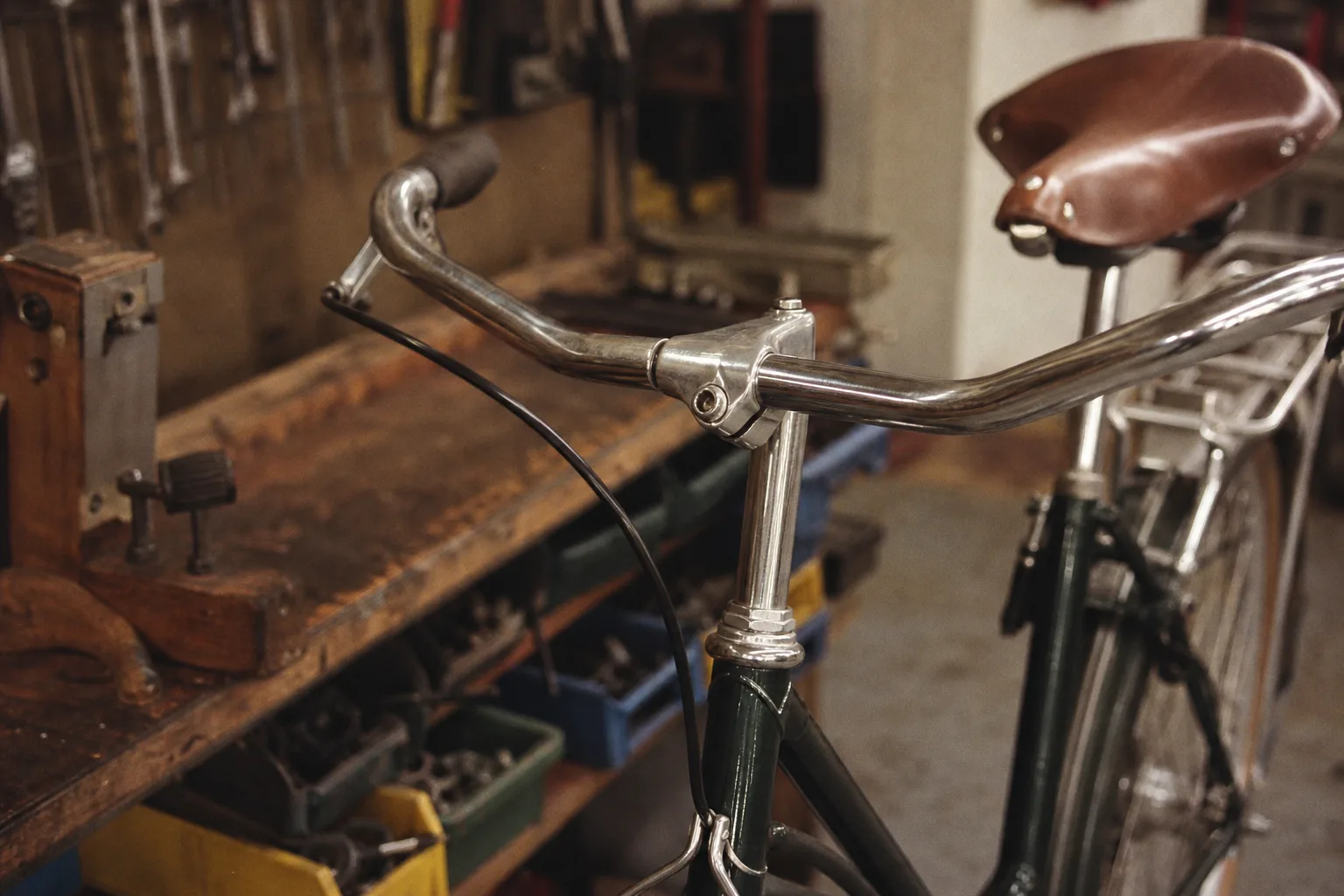
Walk into most shops with a vague complaint about being sore after twenty minutes on a bike, and the conversation goes straight to the saddle. It is the part a person can hold up, squeeze, and sell in five minutes. It is also, in the ordinary case of a rider doing two miles to the hardware store and back, the third or fourth thing that matters. What decides how the ride feels is the angle the body sits at, the width between the points where the body touches the machine, and the volume of air in the tires. Everything else adjusts those three or works around them.
Body angle sets everything downstream
Body angle means how far forward the torso leans, measured roughly from vertical, and it is fixed by the distance and height difference between the saddle and the handlebar. At something close to upright, weight falls through the seat bones and the spine stacks over the pelvis. Lean forward thirty degrees and a share of that weight transfers to the hands and wrists, the neck extends to keep the eyes level, and the lower back does work it did not do before. This is not a comfort preference. It is load routing, and it decides which parts of a rider get tired first on a short trip.
Changing body angle costs less than people expect on a bike that was built for it, and more than they expect on one that was not. A taller stem, a swept-back handlebar, and a shorter reach are parts in the twenty to eighty dollar range at typical shop prices, plus a bit of labor, and they can move a rider several degrees closer to vertical. But a frame designed around a long, low front end runs out of adjustment fast, and past that point the honest answer is a different frame. That is the expensive discovery, and it is better made before the purchase than after.
Contact width, which nobody measures
Three places carry a rider: the sit bones, the hands, and the feet. The width of the first two is set by the saddle's rear width and the handlebar's grip-to-grip span, and both are commonly wrong by an inch or more because they were chosen by look. Sit bone spacing varies enough between people that a saddle correct for one is a pressure point for another, and the symptom is soft-tissue soreness rather than bone soreness, which is why swapping to a softer saddle often makes it worse. Handlebar width works the same way at the shoulders. Too narrow crowds the chest, too wide loads the outer palm.
The good news on cost is that width is the cheapest of the three to correct. A saddle in the right width, grips that spread pressure across the palm instead of concentrating it at the base of the thumb, and a bar that matches shoulder span are all bolt-on parts, all reversible, and all measurable in advance with a piece of corrugated cardboard and a tape measure. Nothing about the frame has to change. A rider who fixes width before spending anything on suspension usually finds the suspension question answers itself.
Tire volume is the suspension most bikes already have
Air volume does the majority of the shock absorption on any bike that is not carrying a rear shock, and volume is a function of tire width and casing shape, not tread pattern. A 28 mm tire at high pressure transmits pavement seams and driveway aprons almost undamped. A 47 mm tire at a pressure suited to the rider's weight rounds those same edges off before they reach the frame. The change is not subtle and it is felt at the hands and sit bones both, because impact energy has to go somewhere and a larger air chamber absorbs more of it. Most upright bikes marketed as a Comfort Bike already carry wide tires for exactly this reason.
The cost here is frame clearance, and it is the one people find out too late. A frame and fork that will only take a 32 mm tire will never take a 45, no matter what is spent on it, and there is no aftermarket part that adds clearance. Tires themselves are cheap, often forty to seventy dollars a pair, and a pressure change costs nothing but a gauge. So the money question is settled at purchase: buy the clearance, then decide the width later.
What the shop points at, and what it costs
Gel saddle covers, suspension seatposts, and front suspension forks all get pointed at because they are visible and they sell. Each does something real in a narrow band, and each is a partial substitute for one of the three things above, usually at higher cost and added weight. The Consumer Product Safety Commission oversees bicycle safety requirements in the United States, which covers brakes, reflectors and assembly, not whether a given setup suits a given body, so that judgment stays with the rider. The useful order is to settle angle and clearance when buying, correct width for a modest sum after, and add hardware only if something is still wrong.
The rest of this site works through those three in turn, one variable at a time on the same errands: a two-mile grocery run, a route with rough pavement, a hill with a loaded rear rack. Each piece states what was changed, what stayed the same, and what the change cost in dollars and in reversibility, because a part that bolts on and a frame that does not fit are very different mistakes.